
Type: Product Design (Web3, Blockchain)
Role: Founding Product Designer
Team: 1 PM/Researcher · 1 Front-end Engineer · 1 Product Designer (myself)
Timeline: 3 months
Company: smlXL (acquired by Dune, 2024)
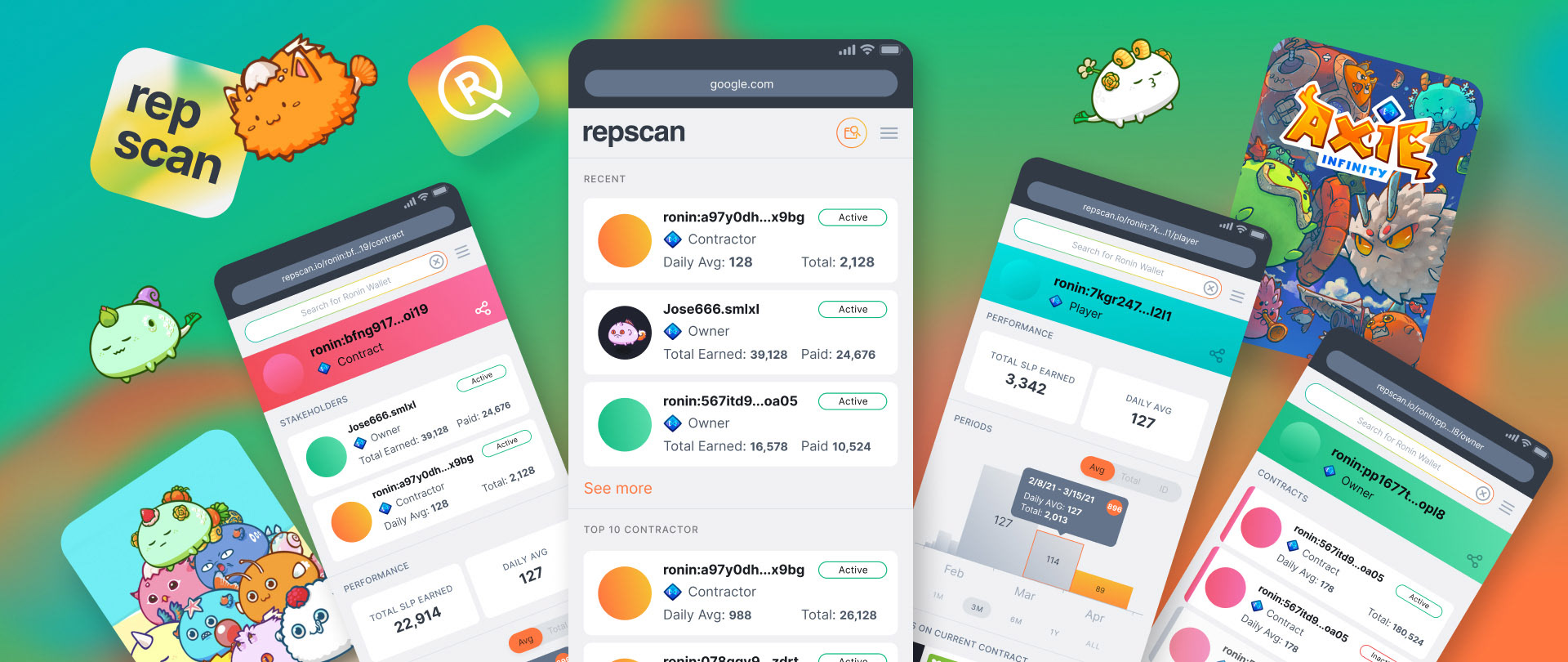
🔍 Executive Summary
RepScan is a mobile-first, browser-based app that helps Axie Infinity users establish trust and transparency in their collaborations. As the first designer at smlXL, I led the end-to-end design, from framing the problem and mapping the user ecosystem to prototyping a blockchain-backed reputation system.
The result was a production-ready proof of concept that demonstrated how blockchain data could foster fairness and accountability in digital labor markets, and laid design groundwork that contributed to smlXL’s next products.
🧠 Context & Challenge
Axie Infinity’s Play-to-Earn model created an informal labor economy where managers (asset owners) and scholars (players) collaborated through manual hand-shake agreements.
However, there was no reliable way to verify reputation or ensure fair payments, leading to mistrust, privacy risks, and disputes.
How might we make these collaborations more transparent, automated, and trustworthy, while preserving users’ privacy?
🔬 Research Insights
We immersed ourselves in the Axie community: joining Discord servers, interviewing players and managers, analyzing existing dashboards.
Key findings:
1. Mobile-first gap — Most players used phones, but available tracking tools were desktop-only.
2. Manual payments — No user-friendly automated system for splitting earnings fairly.
3. Privacy risk — Scholars were asked to share personal IDs to gain trust.
4. No reliability signal — Both sides lacked data to evaluate performance.
2. Manual payments — No user-friendly automated system for splitting earnings fairly.
3. Privacy risk — Scholars were asked to share personal IDs to gain trust.
4. No reliability signal — Both sides lacked data to evaluate performance.
These insights became our design principles: transparent, mobile-first, privacy-centric, and reputation-driven.
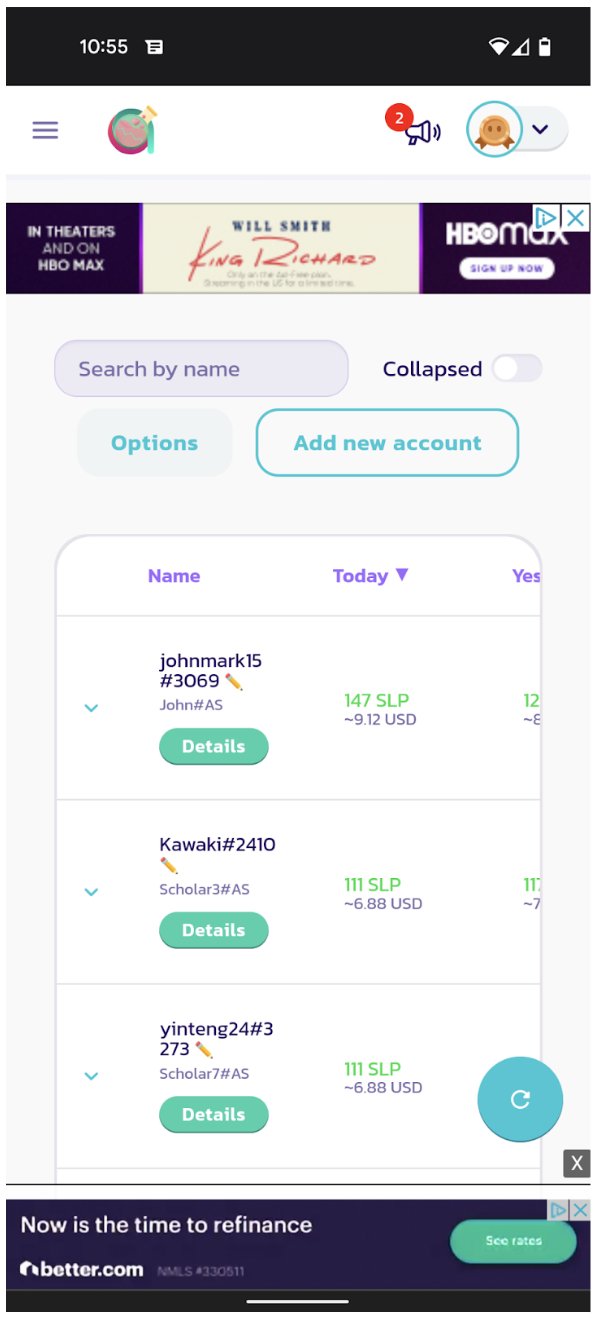
Existing reputation tracker was desktop only, performed terribly on mobile and laden with advertisings.
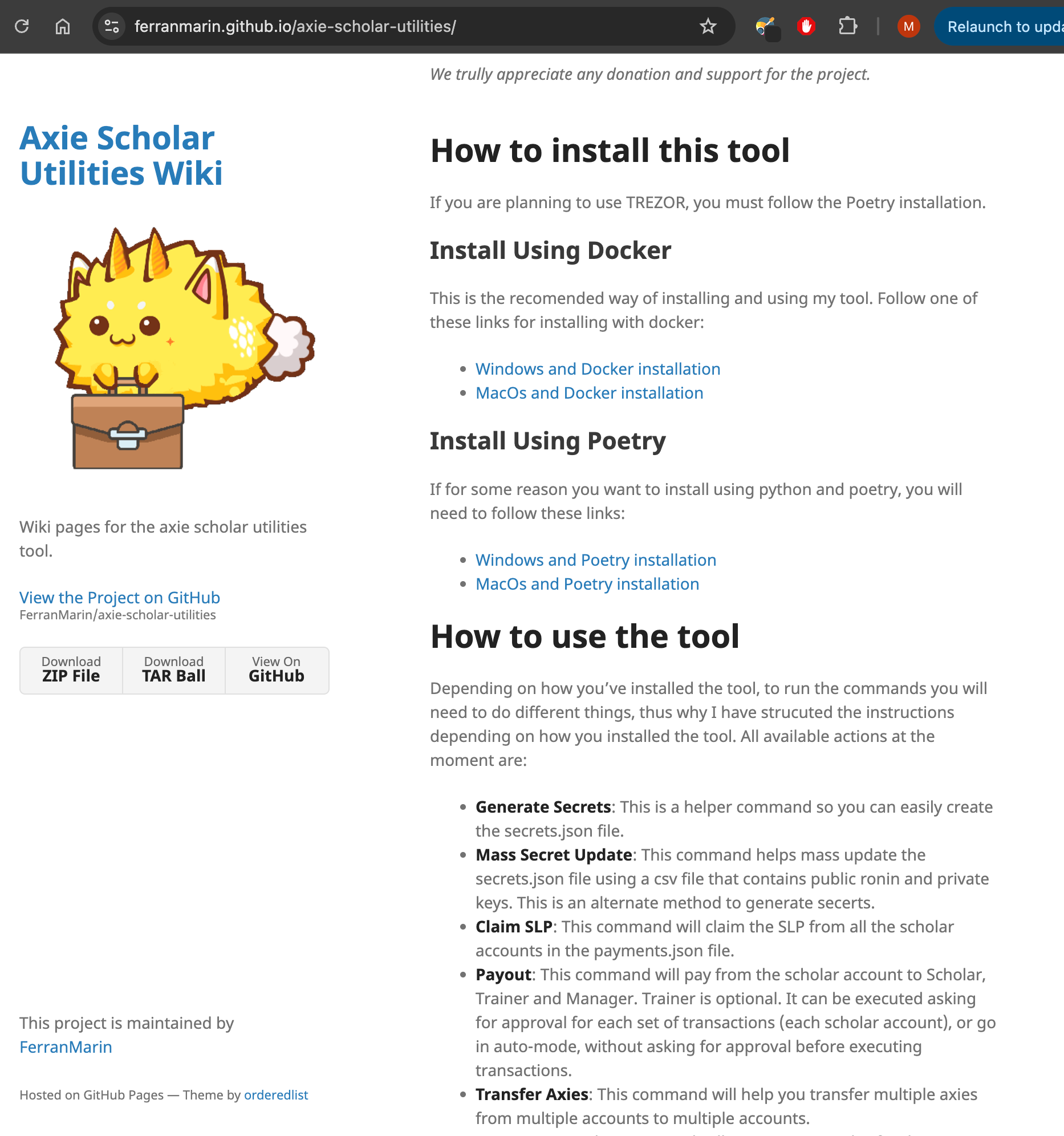
The only payment tool available was far from automated, it didn't have front end. User had to install through Docker and called commands in CLI.
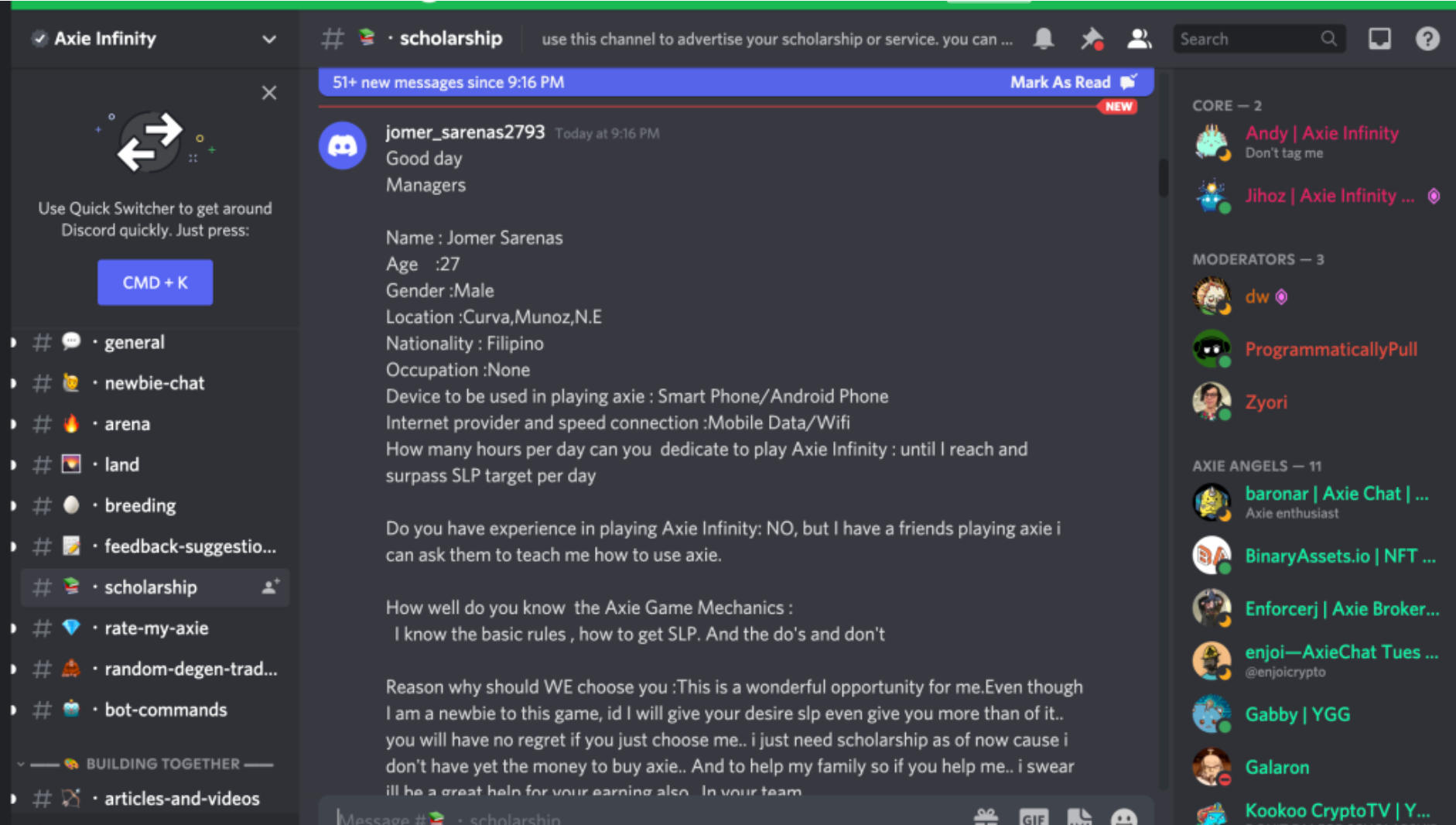
Scholars shared their private details in Discord public channel or X, many asked to share the photo of their IC.
Credibility and performance were self-declared and difficult to be verified.
💡 Concept & Design
1. Scholarship as a Smart Contract
We transformed handshake deals into self-executing smart contracts on the Ronin chain, handling asset lending, usage terms, and automated payouts.
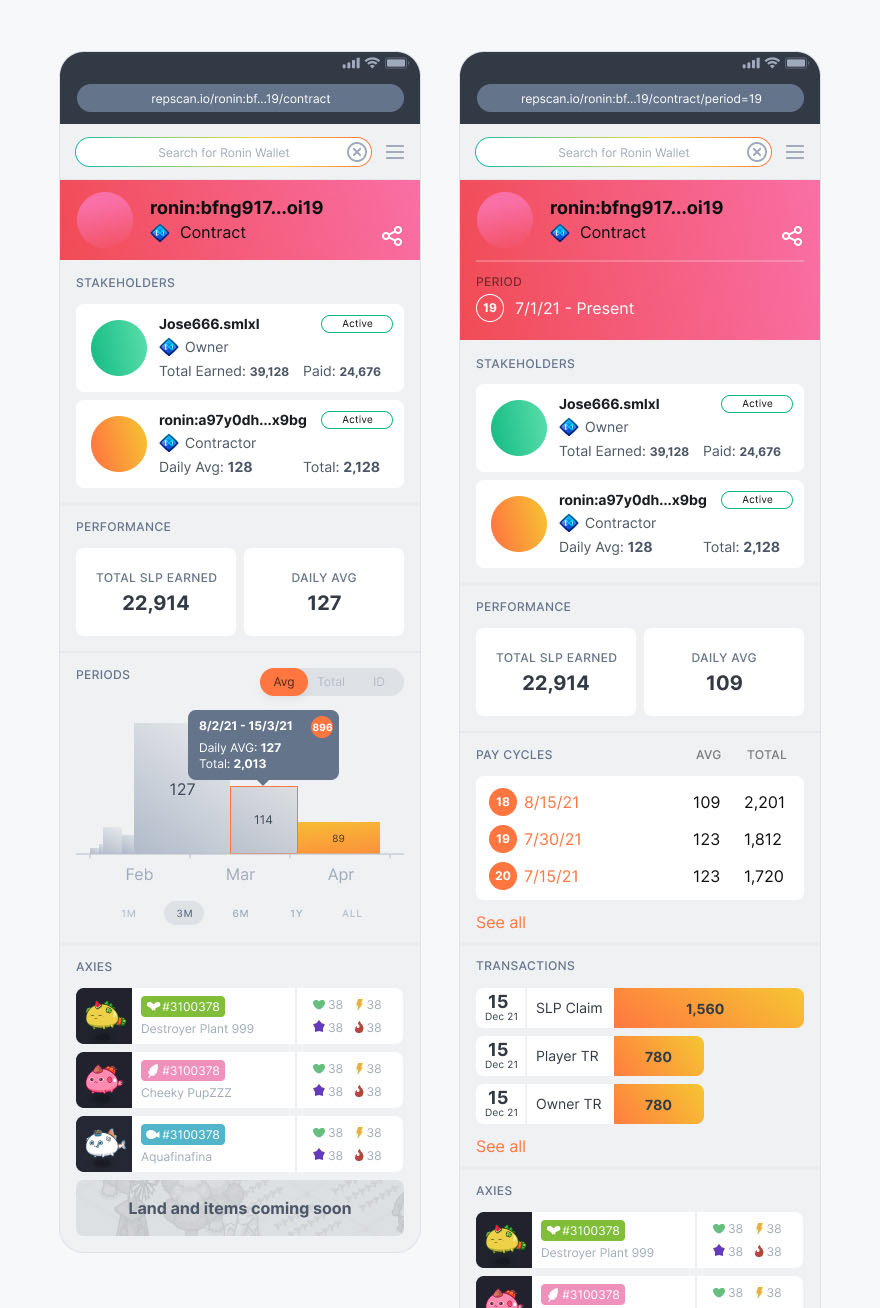
2. Anonymized Reputation System
Users operated under wallet-linked usernames with on-chain reputation profiles, tracking performance and reliability over time.
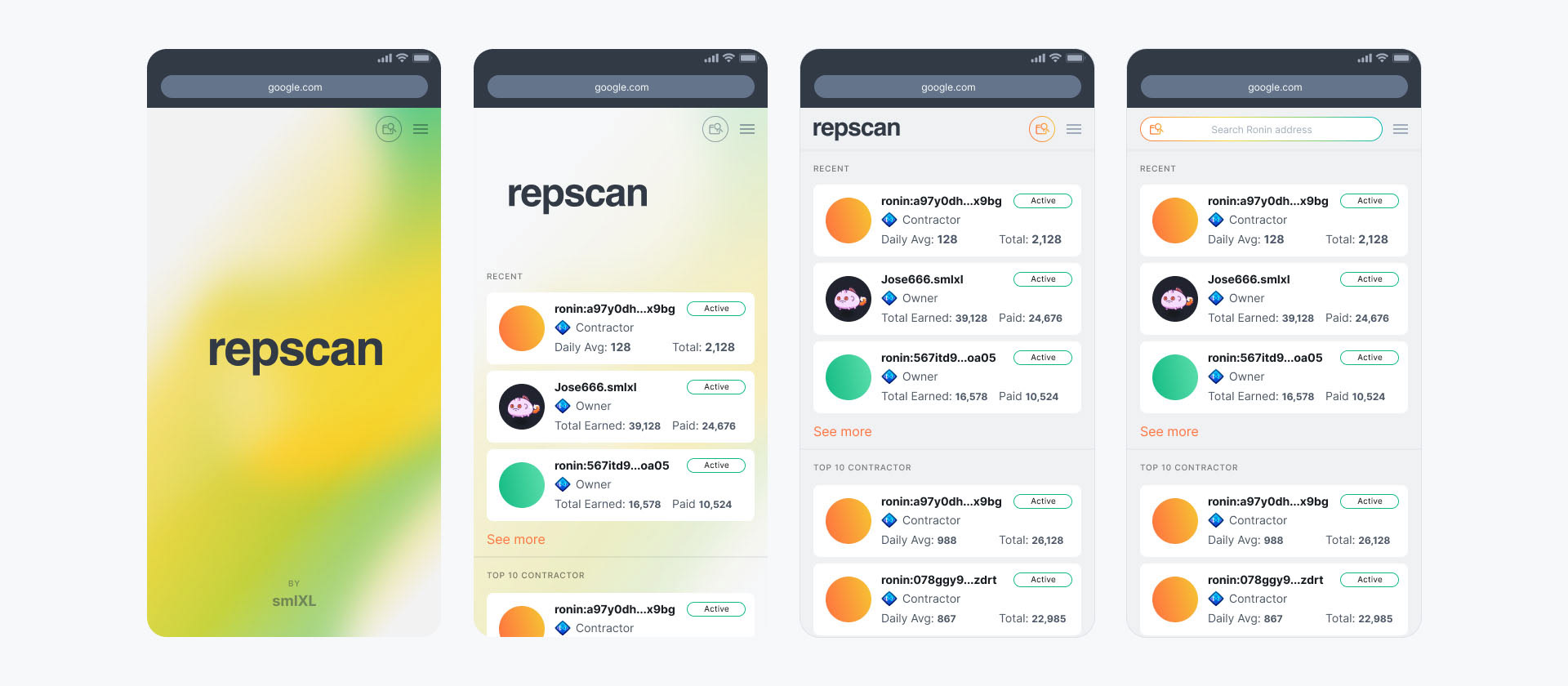
Landing page: a searchable leaderboard showcasing top and featured performers
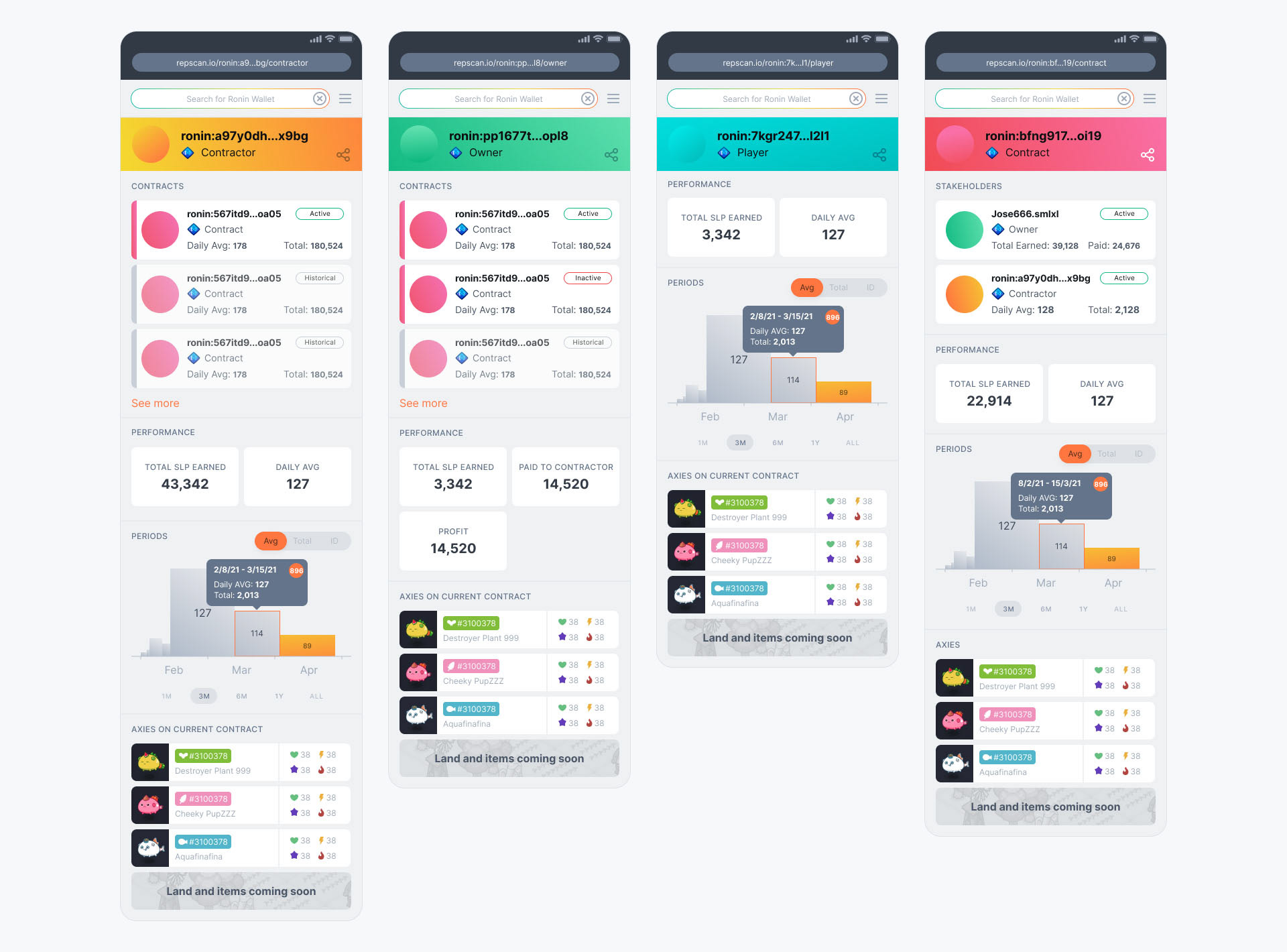
Each profile has their own reputation records. Every performance was recorded down to user's earliest contract.
3. Mobile-First, Browser-Based
Given the audience’s constraints, we designed a lightweight web app optimized for mobile and low bandwidth. No installs, instant access.
🌟 Outcome & Impact
Although we paused the development due to the 2022 crypto crash, RepScan became a proof of concept that informed smlXL’s next direction.
Impact highlights:
- Introduced the first trust layer between scholars and managers using on-chain data.
- Reduced contract setup from hours of manual negotiation to minutes.
- Demonstrated blockchain’s potential for fair user transparency, helping position smlXL for it’s next product development.
🪞Reflection
Working at smlXL as the first designer on the team taught me how to design under high ambiguity and speed, while still building for long-term scalability.
What I learned:
- Design as alignment: Early prototypes and sacrificial concepts clarified the company’s strategy and helped the team converge on a product direction.
- Clarity from complexity: Translating complex blockchain mechanics into human-readable flows required me to dive deep into understanding blockchain technology. Conversing and collaborating with all the smart people in the team enriched my journey as a product designer.
- Growth as a designer: I strengthened my ability to connect emerging technology with user value, a skill I carry into every new challenge.